
Redfish Movement
Reading a Warming Marsh: How Redfish Filter Back In
A warming trend can reopen redfish water, but warm air alone is not the pattern. Redfish filter back in when water level, bait movement, protected routes, and edge shape all start working together.
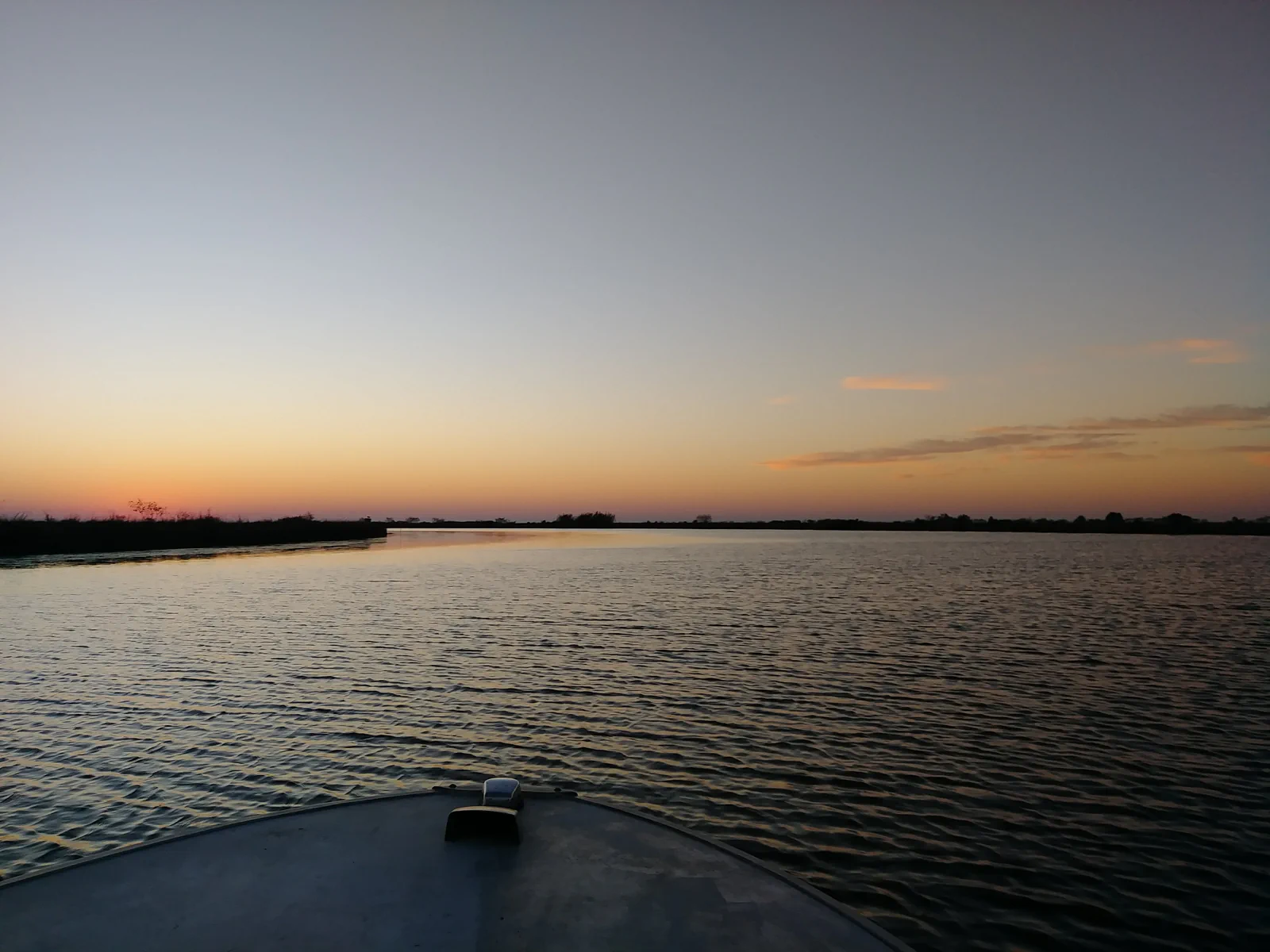
What the Warm-Up Changes
A warming trend raises comfort, wakes up bait, and can pull redfish back toward shallower marsh lanes. But that only matters when the water level gives fish access and the edge has enough life to be worth using.
- Protected water warms faster than exposed water.
- Bait activity usually shows before the whole marsh turns on.
- Water level still decides how far redfish can comfortably push.
The Pattern
Redfish do not usually teleport to the farthest pond just because the afternoon feels better. They filter back through connected routes first. Pond mouths, drains, protected banks, darker bottoms, and narrow lanes usually show the warm-up before broad shallow water does.
- Pond mouths and drains.
- Protected banks with warmer edge water.
- Dark-bottom pockets that collect heat.
- Connected routes with enough depth to slide in and out.
Key Condition Triggers
The warming-marsh pattern gets stronger when temperature, access, and food line up at the same time. If one of those pieces is missing, the pattern becomes less dependable.
- Several warm hours or a multi-day warming trend.
- Enough water for redfish to use the edge without getting trapped.
- Visible bait or feeding activity along the route.
- Cleaner or more stable water than the surrounding open marsh.
Where to Focus First
The first good water is usually not the farthest water. Start where the route begins to make sense. If the mouth or drain has bait and movement, then you can push farther. If the route is dead, the back pond is usually wishful thinking.
- Mouths of ponds and small drains.
- Protected banks that warmed before exposed banks.
- Edges with active bait instead of empty-looking calm water.
- Shallow lanes with nearby depth or an easy exit.
Approach
Use baits that can cover the route without outrunning the read. Spoons, spinnerbaits, soft plastics, and shrimp under a cork all fit, but the lure is secondary. The real decision is how far into the marsh the fish have actually moved.
- Fish the route before fishing the end of the route.
- Move shallow in stages instead of charging all the way back.
- Let bait movement decide whether to push farther.
- Keep one connected fallback if the warm-up is not complete.
When to Lean on This
This becomes a strong option when a warming trend follows cooler or unstable conditions, water level is improving, and protected marsh lanes begin showing bait. It is especially useful when broad open water still feels inconsistent.
- A warm-up is underway after cooler weather.
- Water level is high enough for fish to access the route.
- Bait shows around mouths, drains, or protected edges.
- Open water is still too exposed or inconsistent.
When It Falls Off
This pattern falls apart when the warm-up is only air temperature, not water access and bait movement. If water stays too low, bait is missing, or the edge stays dirty and unstable, redfish may not trust the shallow lane yet.
- Low water keeps fish from using the edge.
- No bait shows along the route.
- The water is dirty, unstable, or blown out.
- The warm-up is too short to change fish behavior.
Bottom Line
A warming marsh can be one of the better redfish patterns of spring, but only if you read the route instead of chasing the warmest-looking pond. Find water level, bait movement, and a protected edge first. Then follow the fish as far back as the conditions actually allow.
How to apply it
Push shallower in stages. Start with pond mouths, drains, protected banks, and connected routes. Move farther back only after bait, water level, and fish behavior prove the warm-up is really being used.
Quick answers
Why do some warming trends still disappoint?
Because temperature alone is not enough. Fish still need water level, bait movement, and enough stability to trust the edge again.
What is the first true sign the marsh is reopening for redfish?
Better bait activity and more confident use of pond mouths, drains, and protected edge routes, not just warmer air.
Should I push all the way shallow on the first warm stretch?
Not automatically. Start where the route into the shallows is reopening, then follow the fish farther only when the water proves it.