
South-Wind Morning
Fishing the Clean Side of a South-Wind May Morning
May gives you more water to fish, but it does not make all of it good. The better south-wind lane is usually the one with enough clarity, bait, movement, and structure to survive after the easy early window fades.
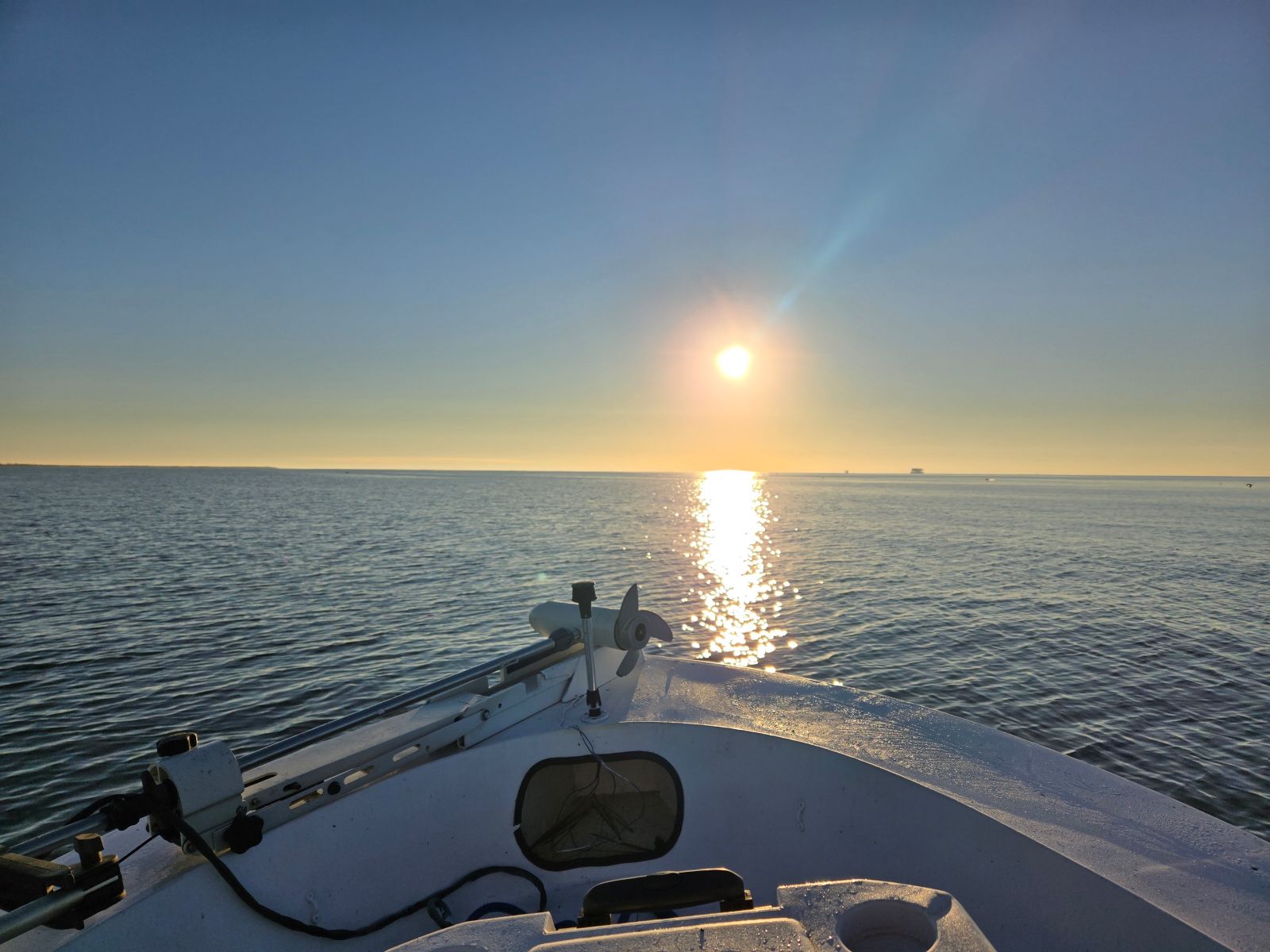
First move
Start with the decision
- Start here: Use the clean early window first, starting where bait, movement, and structure let you read the day quickly.
- If not working: Tighten toward points, drains, reef edges, grass lines, or redfish water where bait has to travel through something.
- Avoid: Do not treat more options like a better plan or fish broad water just because it looks alive.
The Setup
May gives you more water to fish, but it does not make all of it good. That is where a lot of late-spring trips get loose. Shrimp are moving. Trout are spreading. Redfish have more shoreline to use. Points, drains, grass, reefs, and outside edges all start looking like they could work. Some of them will. A lot of them will not. The better move on a south-wind May morning is usually not the biggest-looking water on the map. It is the side that kept enough clarity, bait, and edge definition to keep the day organized after the easy calm starts breaking down.
First Move
Use the clean early window first. That does not mean run blindly to the prettiest open water. It means start where the morning gives you the best chance to read the day quickly: bait on an edge, moving water through a drain, a reef with life on it, or a protected lane that still has enough clarity to matter. If the trout window is there early, take it. But do not build the whole trip around it unless the water gives you a reason to stay. As the sun gets higher, traffic picks up, or the south wind starts spreading things out, tighten the plan. Move toward points, drains, reef edges, grass lines, or redfish water where bait has to travel through something instead of wandering across a broad flat.
The Read
May and June can fool you because everything starts looking fishable. More shrimp show up. More bait gets active. More water has life in it. That sounds like a good thing, and it is, but it also makes weak water look better than it really is. The best water still has to pass the same test: is there bait, is there movement, and is there structure holding it together? If the answer is no, you are not fishing a pattern. You are just covering water.
The Mistake
The mistake is treating more options like a better plan. That is when the day turns into running, guessing, and changing lures every twenty minutes. The problem usually was not the lure. It was the lane. A broad shoreline with scattered bait is not the same as a drain with shrimp getting pushed through it. A big open flat with a little ripple is not the same as a grass edge with clean water and a defined bait line. A pretty reef with no life is not better than a smaller piece of structure that is actually moving groceries. Late-spring water gets vague fast when you fish it too wide.
What Is Actually Happening
May and June are about expanding bait and shrinking prime windows. Shrimp and small baitfish open up more of the marsh and outer edges. Warmer water gets fish moving. But heat, boat traffic, weak tide, and south wind can also spread everything out. That means the best bite often happens in pieces. You may get a clean trout window early. Then the better decision may be to slide tighter, follow bait movement, or switch into redfish water before the morning gets sloppy. The whole trip should not depend on one open-water idea holding up all day.
Movement Logic
On rising water, bait can push farther onto grass edges, points, and protected shorelines. On falling water, shrimp and small bait get pulled back toward drains, reef edges, mouths, and current seams. When movement is weak, broad water gets lazy. That is when tighter structure matters more. The cleaner side of a south-wind morning is not always dead calm. It is the side where the wind has not ruined the clarity, the bait still has a route, and the structure still gives fish a reason to set up.
How To Adjust
Fish May like a sequence. Start with the best clean window. Read the bait. Take the trout opportunity if it is honest. Then tighten up before the day gets too spread out. That may mean moving from open trout water to a reef edge. From a broad shoreline to a drain. From a clean flat to a protected redfish lane. From pretty water to water that actually has movement and groceries. The goal is not to fish everything. The goal is to stay ahead of the morning as it changes.
Bottom Line
May and June give you more choices, but they do not remove the need for a read. The better south-wind lane is usually the one with enough clarity, bait, movement, and structure to survive after the easy early window fades. Fish the morning in sequence, not in panic. Start clean. Stay with bait. Tighten up when the water gets vague.
How to apply it
Fish the morning in sequence. Start clean, stay with bait, and tighten up when the water gets vague.
Quick answers
What is the cleanest way to fish a south-wind May morning?
Start where clarity, bait, movement, and structure still line up, then tighten the plan as the wind, traffic, and heat spread the water out.
When should I leave the open trout idea?
Leave when the water stops giving you a reason to stay: bait scatters, movement weakens, clarity fades, or the lane no longer has structure holding it together.