
Freshwater Depth Read
Bogue Chitto in Spring: Start With Depth Before You Start With Banks
Bogue Chitto will fool you in a hurry if you start with the prettiest bank in sight. Most spring days get cleaner when you first ask where the river is giving bass, perch, and catfish a stable depth lane, then work outward from there instead of the other way around.
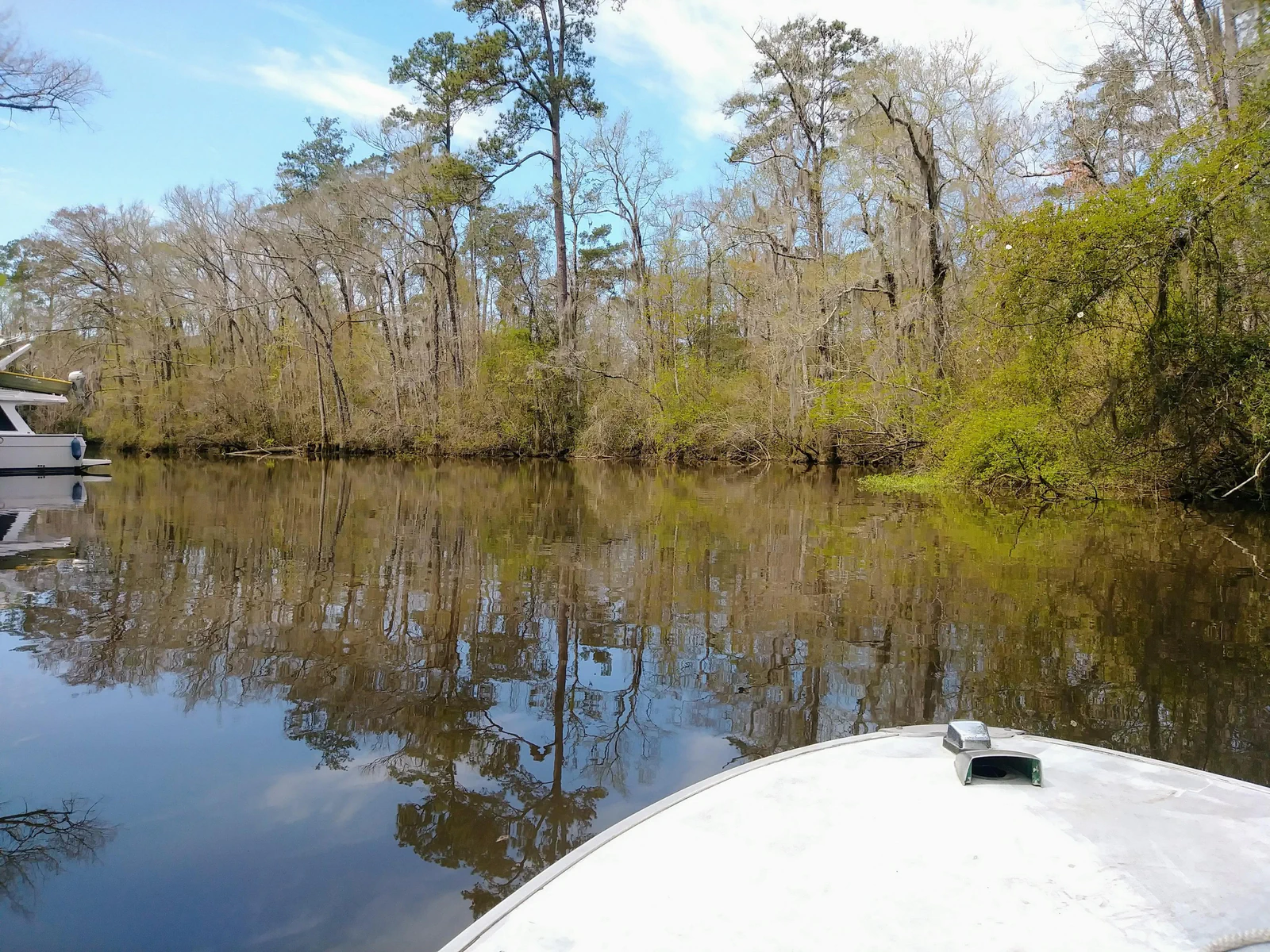
The read
This river changes over short distance. Lock 3 Launch, Highway 21, and Poole's Bluff all show you a version of the same lesson: current, depth, and wood sort the fish before scenery does. Largemouth bass usually want a 2 to 6 foot edge around wood or a softer break. Perch care more about exact depth control, often around timber and steadier water. Catfish stay honest when the seam and bottom lane still make sense.
The mistake
The common mistake is forcing bank water that looks fishy but never solves depth, current, or bait movement. Bogue Chitto can look alive and still be vague. If the lane has no defined break, no soft current, and no reason for groceries to pause, all you are really doing is casting at scenery.
- Pretty banks without depth nearby waste more casts than people admit.
- If the river is pushy, broad current is a worse answer than protected side water.
- A missed spring read here is usually a lane problem before it is a lure problem.
What is actually happening
This river changes over short distance. Lock 3 Launch, Highway 21, and Poole's Bluff all show you a version of the same lesson: current, depth, and wood sort the fish before scenery does. Largemouth bass usually want a 2 to 6 foot edge around wood or a softer break. Perch care more about exact depth control, often around timber and steadier water. Catfish stay honest when the seam and bottom lane still make sense.
How the bite sets up
The best Bogue Chitto spring water usually gives you a defined drop, some wood, and enough current to keep groceries moving without blowing the whole lane out. Think bluff-related bends, timber edges, and softer current seams where fish can slide up and back without abandoning the stretch.
- Bass usually tell quickest on cleaner wood-and-current edges in 2 to 6 feet.
- Perch get easier when you fish the holding depth instead of just the visible cover.
- Catfish become a better second-half answer when the bottom seam still has current integrity.
Movement logic
Start on the first stable bend, timber line, or seam that gives you a real 4 to 10 foot break. Throw moving baits if the river has shape and bait, but be ready to slow down with a jig, soft plastic, or live bait as soon as the fish show themselves without fully committing.
What it looks like on the water
The best Bogue Chitto spring water usually gives you a defined drop, some wood, and enough current to keep groceries moving without blowing the whole lane out. Think bluff-related bends, timber edges, and softer current seams where fish can slide up and back without abandoning the stretch.
How to adjust
If the first bank is vague, do not run all over the river. Tighten into the next bend, the next timber seam, or the next protected depth lane that solves the same problem more clearly. Let the bass lane, perch depth, or catfish seam tell you which version of the river is truly alive that day.
- Slide to the next matching depth lane before changing the whole plan.
- If perch show but bass do not, get more exact with depth before leaving.
- If the moving-bait window dies, switch to slower live-bait presentations around the same cover first.
When it falls off
The common mistake is forcing bank water that looks fishy but never solves depth, current, or bait movement. Bogue Chitto can look alive and still be vague. If the lane has no defined break, no soft current, and no reason for groceries to pause, all you are really doing is casting at scenery.
- Pretty banks without depth nearby waste more casts than people admit.
- If the river is pushy, broad current is a worse answer than protected side water.
- A missed spring read here is usually a lane problem before it is a lure problem.
Bottom line
If the first bank is vague, do not run all over the river. Tighten into the next bend, the next timber seam, or the next protected depth lane that solves the same problem more clearly. Let the bass lane, perch depth, or catfish seam tell you which version of the river is truly alive that day.
How to apply it
Start on the first stable bend, timber line, or seam that gives you a real 4 to 10 foot break. Throw moving baits if the river has shape and bait, but be ready to slow down with a jig, soft plastic, or live bait as soon as the fish show themselves without fully committing.
Quick answers
What is the cleanest first move on Bogue Chitto in spring?
Start where current, wood, and the first real depth break all stay in the same conversation instead of just fishing the nicest-looking bank.
How shallow should I start for bass?
Usually around 2 to 6 feet unless the river is high enough that the first protected break out becomes the better opening move.
When does perch fishing get better on this river?
When you stop drifting the whole bank and start controlling exact depth around timber, knees, and steadier water.